Laser Cap vs Laser Band vs LaserComb: Which At-Home Hair Growth Device Fits You?

Quick answer
A laser cap, laser band and LaserComb all deliver the same basic thing: low-level red light to the scalp to support hair growth in pattern hair thinning. The difference is how much of the scalp each covers in one session, how long a session takes, how hands-free it is and what it costs. A cap covers the whole top of the head at once and is the most hands-free but costs the most. A band is a middle option: faster than a comb, cheaper than a cap, but you move it across the scalp. A LaserComb is the most affordable entry point but needs the most time and care to cover every area evenly.
If your thinning is spread across the crown and part line and you know you will skip anything fiddly, a cap such as the Lumina 272 cordless cap is easiest to stick with. If you want a lower price but still want short sessions, look at the LaserBand 41. If you are testing the waters or only treating a small area, a comb like the Ultima 9 LaserComb is the lowest-cost start.
Key takeaways
- Consistency beats device type. The best device is the one you will actually use on schedule for months.
- Coverage matters more than laser count alone. More diodes help only if they reach the areas where you are thinning.
- Expect a slow timeline. Laser therapy is typically judged over several months, not weeks, and results vary from person to person.
- It suits pattern thinning best. Sudden, patchy, painful or rapid shedding needs a doctor or dermatologist first.
- It pairs with good scalp care. Gentle cleansing, less heat and less tension on the hairline protect the hair you already have.
Definitions: the terms you will see on product pages
- Low-level laser therapy (LLLT)
- Also called photobiomodulation or red-light therapy. It uses low-power red light (not the heat lasers used for hair removal) aimed at the scalp. It does not cut, burn or remove anything.
- Androgenetic alopecia
- The medical name for pattern hair loss. In women it usually shows up as a widening part and thinner crown; in men as a receding hairline and thinning crown. At-home laser devices are marketed for this type of thinning.
- FDA-cleared
- A device-clearance pathway in the United States that allows a home-use medical device to be marketed for a stated use. It is not the same as a drug approval, and it does not promise results for everyone.
- Diode count
- The number of light sources in a device. It is one spec among several; spacing, coverage and session design matter too.
- Hands-free
- Devices you wear (caps, some bands) rather than glide by hand. Hands-free devices are easier to fit into a routine.
How each device type works in real life
Laser caps: whole-scalp, hands-free
A laser cap sits on your head like a soft hat with light diodes inside the dome. You switch it on, sit or move around the room, and it switches itself off when the session ends. Because it covers the top, sides and crown together, it is the best fit for diffuse thinning, which is very common in women and in men with crown thinning. The trade-off is price and fit: caps are the most expensive category, and a cap needs to sit close to the scalp to work as designed, so very thick or voluminous styles can get in the way.
The Hairmax Lumina 272 is the cordless cap option in the current Hairmax line-up. Cordless matters more than it sounds: if you can wear it while you answer email or fold laundry, you are far less likely to skip sessions.
Laser bands: quick sessions, you move it
A band looks like a wide headband with diodes on the inside. You place it on one area of the scalp, wait for the timer, then shift it back to the next area. Sessions are short, and because the band is wide it covers far more scalp per pass than a comb. It is a good option if you have thinning along the part line and crown but do not want to pay cap prices. The LaserBand 41 ComfortFlex is the Hairmax option here.
LaserCombs: lowest cost, most hands-on
A LaserComb has a row of teeth that part the hair while the light shines between them. You glide it slowly across the scalp in rows. It is the cheapest way to try laser therapy, and it gives you precise control over small areas such as temples. The downside is time: you have to work methodically, row by row, and it is easy to miss patches if you rush. The Actonis 18 Dual Action LaserComb and the Ultima 9 Classic LaserComb are the two comb options.
Laser cap vs band vs comb: comparison table
| Factor | Laser cap | Laser band | LaserComb |
|---|---|---|---|
| Coverage per session | Whole top of scalp at once | One section at a time, wide | One row at a time, narrow |
| Hands-free? | Yes | Mostly (you reposition it) | No |
| Effort per session | Lowest | Low | Highest |
| Best for | Diffuse thinning, busy routines | Part line and crown on a budget | Small areas, first-time users |
| Typical price band (Hairmax list) | Highest (about $2,000) | Mid (about $600) | Lowest (about $250–$450) |
| Example | Lumina 272 | LaserBand 41 | Ultima 9 / Actonis 18 |
Prices are list prices seen on the brand site on November 17, 2026. Sales, financing and bundles change often, so check the current price before you buy.
Buying checklist: what to check before you pay
Product pages for laser devices can be long and technical. These are the points that actually change your experience after purchase:
- Clearance and intended use. Confirm the device is cleared for home use for hair growth and read what type of hair loss it is intended for.
- Session length and weekly frequency. Multiply the session time by the number of sessions per week. That number, not the diode count, tells you whether it fits your life.
- Power source. Cordless devices are easier to use while doing something else. Corded devices tie you to a wall socket for the whole session.
- Comfort and fit. Caps and bands should sit close to the scalp without pressing hard. If you have a larger or smaller head, check sizing notes.
- Warranty and returns. Electronics fail occasionally. Note the warranty length and whether there is a money-back window. Hairmax lists a one-year warranty and free U.S. shipping on its store; check the current terms on the Hairmax site before ordering.
- Payment options. Higher-priced caps are often offered with buy-now-pay-later plans. Treat these like any loan: only use them if the monthly payment is comfortable for the full term.
Can you combine laser therapy with other treatments?
Many people use laser therapy alongside other approaches, such as a topical product their doctor recommends, a gentler styling routine or nutrition changes if a deficiency is found. Whether combining makes sense for you depends on the cause of your thinning and any medication you take, so this is a question for your doctor or dermatologist. What you can safely do on your own is support the hair you have: wash regularly with a mild shampoo, limit high heat, loosen tight styles and protect your scalp from sunburn when your part is more visible. Hair-care add-ons such as the Hair Density Collagen Complex are supplements, so check the label and ask your doctor if you take other supplements or medication.
Decision framework: choose in four questions
- Where is the thinning? Mostly a widening part or overall see-through crown: lean toward a cap or band. A small receding area at the temples: a comb can handle it.
- How much time will you honestly give it? If a session has to fit into a morning that is already full, choose hands-free. If you enjoy a quiet routine in the evening, a comb is fine.
- What is your budget, including patience? A cheaper device that you give up on is more expensive than a costlier device you use for a year. If budget is tight, a band often gives the best balance.
- What does your hair look like on a normal day? Very thick hair, braids, locs or protective styles can block light. Combs part hair as they go; caps and bands work best when the scalp is accessible, so plan sessions around wash days or looser styles.
If two answers point to different devices, let question two decide. Routine fit is the factor that most often decides whether people see the results they hoped for.
Building a routine you will keep
Whatever device you choose, the routine around it does a lot of the work. A simple weekly structure keeps you on track:
- Pick fixed days. Most at-home devices are used a few times a week. Put the sessions on the same days each week and set a phone reminder.
- Start with a clean, dry scalp. Heavy oils, gels and buildup sit between light and skin. Use your device on wash days or before styling.
- Take baseline photos. Photograph your part line and crown in the same light, same angle, once a month. Hair change is slow and easy to misjudge in the mirror.
- Be gentle with tension and heat. Tight ponytails, heavy extensions on fragile edges and daily high heat can make thinning look worse. If you wear wigs, choose breathable, low-tension caps and give your edges rest days.
- Support the scalp. A light scalp product such as the RSN8 Scalp Nourishing Serum or a full care set like the Density Bio-Active Hair Therapy Set can make the routine feel complete; treat these as hair-care products, not medical treatment.
Follow the session length and frequency in your device manual. Using a device more often than directed does not speed things up.
Real-world scenarios
Scenario 1: widening part, busy mornings
Maya, 42, noticed her part getting wider over two years. She works long days and knows she will not sit still with a comb. A cap she can wear while getting ready is the most realistic choice, paired with gentler styling and fewer tight buns.
Scenario 2: crown thinning, mid budget
Daniel, 35, has a thinning crown and a slightly higher hairline than a few years ago. He wants to try laser therapy without spending cap money. A band covers the crown in a few placements and keeps sessions quick.
Scenario 3: wig wearer protecting her edges
Renee wears lace wigs most of the week and has fragile edges at the temples. She uses a comb on her temples on wig-free days and switches to a glueless, low-tension cap for daily wear. For her, precision on a small area matters more than whole-scalp coverage.
Scenario 4: sudden shedding after illness
Sam lost noticeably more hair a few months after a high fever. That pattern can have a different cause from pattern thinning. The right first step here is a doctor's visit, not a device purchase.
Common mistakes to avoid
- Judging too early. Stopping after a few weeks because nothing seems different is the most common mistake. Use monthly photos instead of daily mirror checks.
- Buying on diode count alone. A higher number is not useful if the device does not reach your thinning area or does not fit your routine.
- Skipping the diagnosis. Thyroid issues, iron deficiency, medications, stress and some scalp conditions can all cause shedding. A device will not fix those.
- Using it through heavy product. Thick pomades and oils can block light. Clean scalp first.
- Ignoring styling damage. Laser therapy will not undo traction from tight styles. Loosen tension on the hairline at the same time.
- Not checking the return policy. Read the warranty and return terms before you buy so you know your options.
Limitations and safety checks
At-home laser devices are not a cure for hair loss, and they do not work for every person or every type of hair loss. They are intended for pattern thinning. They are generally not designed for scarring alopecias, patchy alopecia areata or hair loss caused by an untreated medical problem.
Talk to a doctor or dermatologist before you start if you have a scalp condition, light sensitivity, are pregnant, take medication that increases sensitivity to light, or if your hair loss is sudden, patchy, itchy or painful. A dermatologist can also tell you whether options such as topical or prescription treatments fit your situation, and whether laser therapy can be used alongside them.
This article is general information, not medical advice.
Shop the picks
Products and list prices from Hairmax, checked on November 17, 2026. Prices and availability can change; confirm on the retailer's page.
- Lumina 272 Cordless Laser Cap$1,999.00Check price and details at Hairmax
 LaserBand 41 ComfortFlex$599.00Check price and details at Hairmax
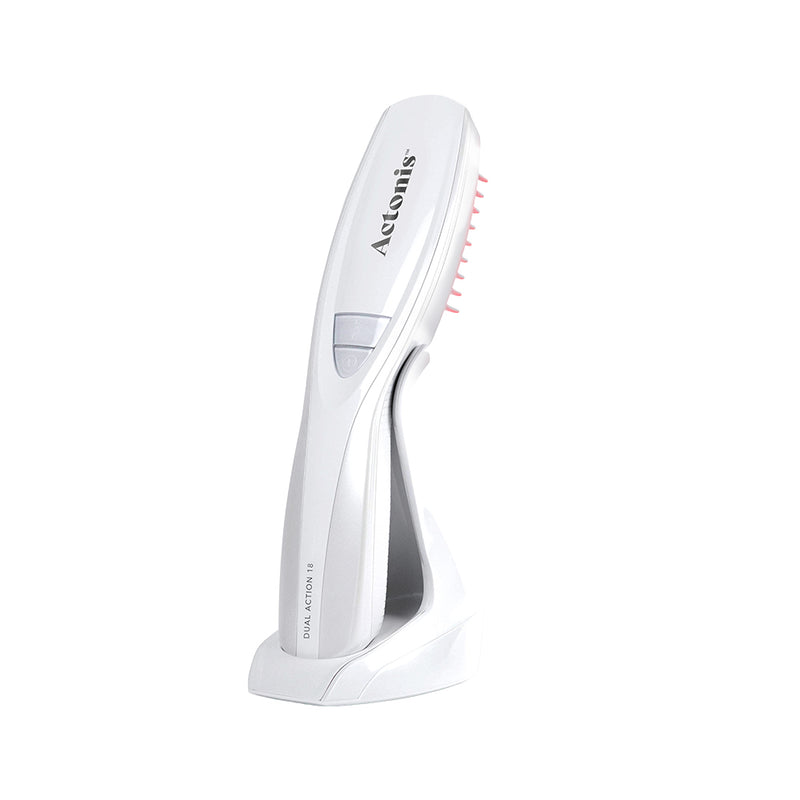 Actonis 18 Dual Action LaserComb$449.00Check price and details at Hairmax
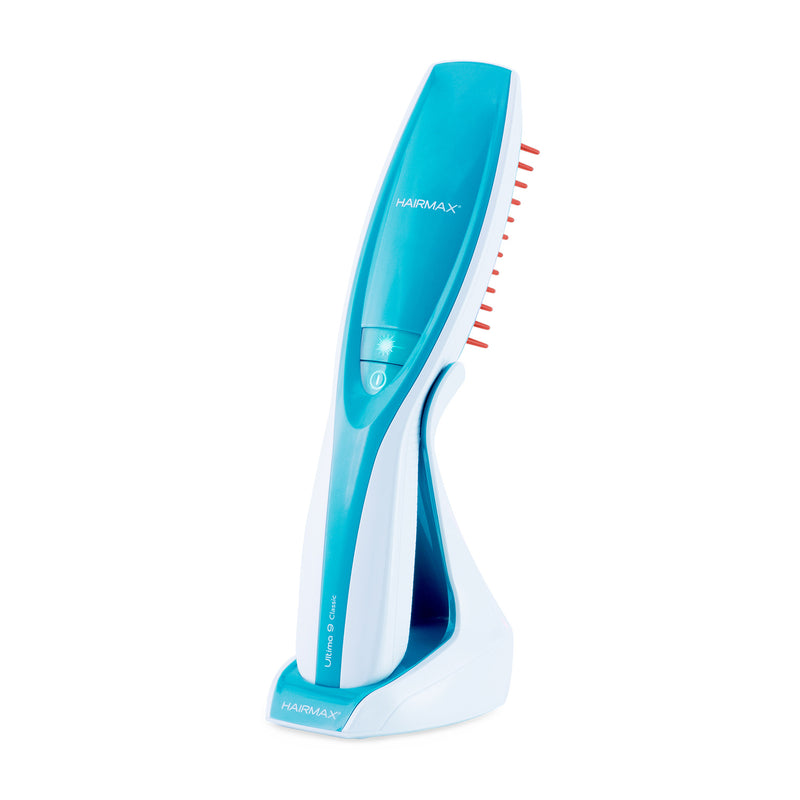 Ultima 9 Classic LaserComb$249.00Check price and details at Hairmax
 Density 4-Piece Bio-Active Hair Therapy Set$170.00Check price and details at Hairmax
 RSN8 Scalp Nourishing Serum$55.00Check price and details at Hairmax
Bottom line
Choose a laser cap if you want the easiest whole-scalp routine and the budget allows it. Choose a band if you want short sessions at a mid price. Choose a LaserComb if you are treating a small area or want the lowest-cost way to start. Whichever you pick, use it on a fixed schedule, track progress with monthly photos and get any sudden or patchy hair loss checked by a doctor first. You can compare the full line-up on the Hairmax store.
Frequently asked questions
Do laser caps work better than LaserCombs?
Not necessarily better per area, but caps cover the whole top of the scalp in one hands-free session, which makes them easier to use consistently. Combs can work well for small areas if you use them carefully and on schedule.
How long before I can judge results from a laser hair growth device?
Laser therapy is usually judged over several months of consistent use, not weeks. Take monthly photos in the same light and angle so you can compare fairly, and follow the timeline in your device instructions.
Can I use a laser cap if I wear wigs or braids?
Yes, but the light needs to reach the scalp. Plan sessions for wig-free days or looser styles, and avoid using the device through thick braids or a wig cap.
Is red light therapy for hair safe?
Home-use devices cleared for hair growth use low-power light and are designed for home use when you follow the instructions. Check with a doctor first if you have light sensitivity, a scalp condition, are pregnant or take light-sensitizing medication.
Does a higher number of lasers mean faster results?
Not on its own. Coverage, fit, session design and consistent use all matter. A device that reaches your thinning areas and fits your routine is the better buy.
Should I see a dermatologist before buying a device?
It is a good idea, especially if your hair loss is sudden, patchy, painful or itchy. A dermatologist can identify the cause and tell you whether laser therapy suits your type of hair loss.